
The right business sign depends on where people see it from: the road, the sidewalk, your front door or your lobby. These are the sign types we make most often for businesses across the Greater Toronto Area, what each is good at, and how to choose.
Storefront and exterior signs
Channel letter signs
Individual 3D letters, usually lit from inside or behind with LEDs. They are the standard for plaza storefronts and building fascias because they read from the road at night and look sharp in daylight.
Lightbox and push-through signs
A lightbox is one lit cabinet with your design on its face. The face can be replaced when your branding or tenant changes, which keeps future costs down. Push-through signs have letters that stand out from the face for a more premium look.
Backlit and halo-lit signs
Letters lit from behind throw a glow onto the wall. They suit restaurants, salons and offices that want a softer, upscale look.
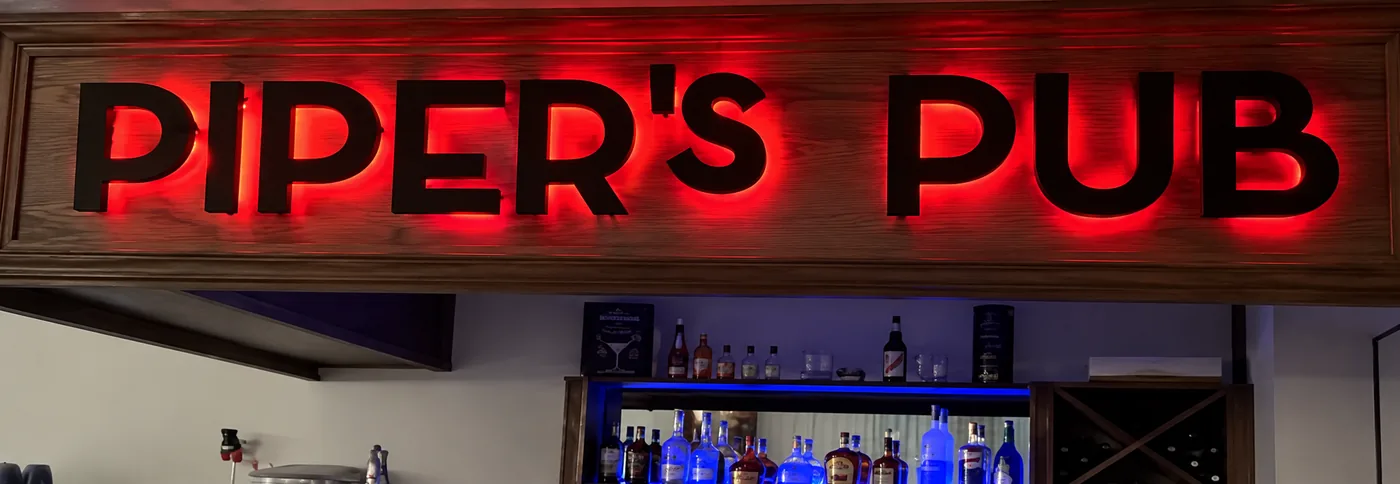
3D lettering and building fascia signs
Non-lit dimensional letters or panels in acrylic, aluminium or wood, fixed to the building face. A clean choice when your store is busiest in daylight.
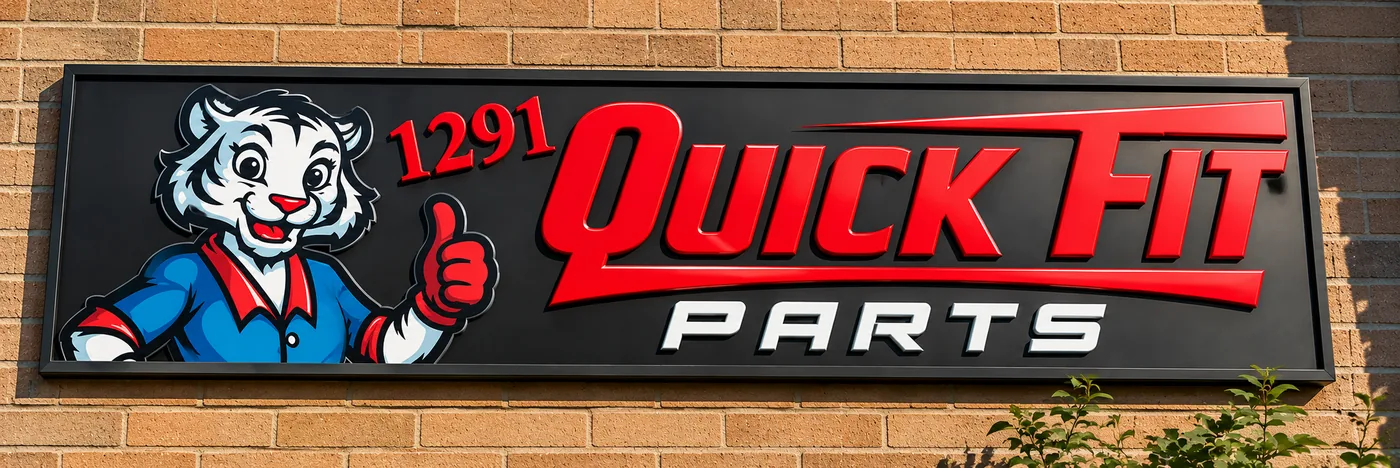
Signs that help people find you
- Pylon signs stand at the roadside, often listing every tenant in a plaza, and catch drivers before the turn.
- Blade signs stick out from the wall at right angles, so people walking along the sidewalk see them.
- Parking and directional signs guide visitors from the street to your door.
Interior signs
Reception and lobby signs, wall logo signs and stand-off acrylic signs are the first thing clients see when they walk in. Room and door signs, office branding and wayfinding signs keep a building easy to get around.

Window and wall graphics
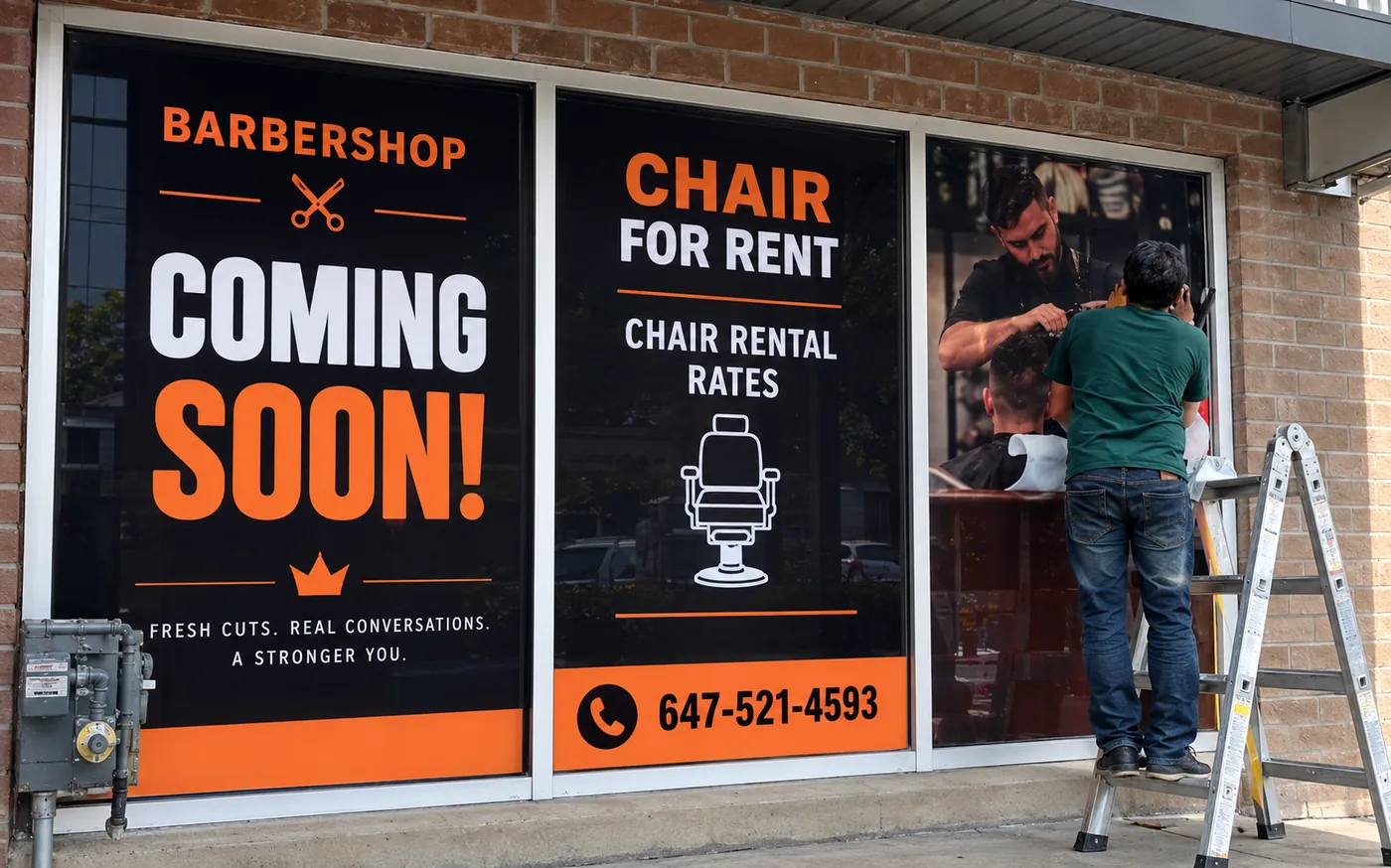
- Window decals and vinyl lettering show your name, hours and services on the glass.
- Frosted privacy film gives offices and clinics privacy while still letting light in.
- Perforated window film shows a graphic outside while staff can still see out.
- Full window wraps and wall murals turn glass and walls into large-format branding.
How to choose the right sign
- Viewing distance and speed: drivers on a main road need larger, lit letters; people on a sidewalk can read smaller signs up close.
- Hours: if you are open after dark, choose an illuminated sign.
- Your landlord: plazas and office buildings often set the sign type, size and lighting tenants may use.
- Permits: most exterior signs need a city permit; interior signs and window graphics usually do not.
- Budget over time: a lightbox face is cheap to change later; channel letters cost more up front and last for years.
Sign permits in Ontario
Most Ontario municipalities, including Toronto and Mississauga, require a sign permit before an exterior sign goes up, and the rules vary by city and zoning. Give us the address when you request a quote and we will include what your site needs.
Get a quote
Choose the sign types you need in our business sign planner and upload your logo. You get a firm quote and a rendered proof within one business day. Our own team installs across the GTA, and we ship across Canada.